Of 37 people who reported opioid use after their next naltrexone injection was due, 18 also reported repeated use before it
Why it matters
When someone stops getting monthly naltrexone shots, it can look as if they started using opioids again only after the next shot was due. In this trial, 18 of the 37 people who reported using opioids afterward said they had already used them on at least two days between their last shot and the next due date. Their accounts tell us when they used opioids, but not when the medicine stopped blocking the effects.
Monthly naltrexone injections block the effects of opioids and are used to treat opioid use disorder. When someone goes without the next injection and later reports opioid use, clinicians may want to know whether use resumed after the injection was due or was already recurring beforehand. A weekly urine test can detect recent use but cannot distinguish a single day of use from a stretch of daily use.
In X:BOT, a 24-week trial comparing injectable naltrexone with another treatment, buprenorphine-naloxone, participants recalled which drugs they used on which days, including days when they gave no urine specimen. After their final study injection, 37 participants reported opioid use in the three weeks after the usual date for their next dose. Of those 37, 18 (49%; 95% confidence interval 33–64%) also reported use on at least two days before that date. Twelve reported daily use spanning the date.
Background
The X:BOT investigators anticipated that some participants might skip an injection before resuming regular opioid use. They also allowed an early injection if craving or use returned in the fourth week. In a separate trial comparing naltrexone with placebo, a positive weekly urine test predicted dropout the following week among placebo recipients. The association was uncertain among naltrexone recipients. The day-by-day interviews in X:BOT let us examine how often use reported after a dose went unrenewed extended back before the usual dose date.
Results
For 104 participants, the final study injection came early enough to allow another monthly dose and 49 days of follow-up within the planned treatment period. We counted the final injection as day 0. The usual interval between doses was 28 days. Of the 37 who reported use on days 29–49, 13 had no documented use on days 1–27, six reported one day of use, and 18 reported at least two (Table 1). Across all 104 participants, 19 reported at least two days of use before day 28 (18%; 95% confidence interval 12–27%).
Table 1. Number of participants by reported use before and after the usual dose date. “None documented” can include days with missing information.
| Use days reported on days 1–27 | Use reported on days 29–49 | No use documented on days 29–49 | Total |
|---|---|---|---|
| None documented | 13 | 64 | 77 |
| One | 6 | 2 | 8 |
| Two or more | 18 | 1 | 19 |
| Total | 37 | 67 | 104 |
Twelve participants reported use on days 27, 28 and 29, placing the usual dose date within an uninterrupted run of use (Figure 1). Nine reported use every day from day 21 through day 35. For ten of the 12, the run included a full week of daily use before day 28. Nine of those ten still had a full week when we counted only days on which they specifically reported heroin use.
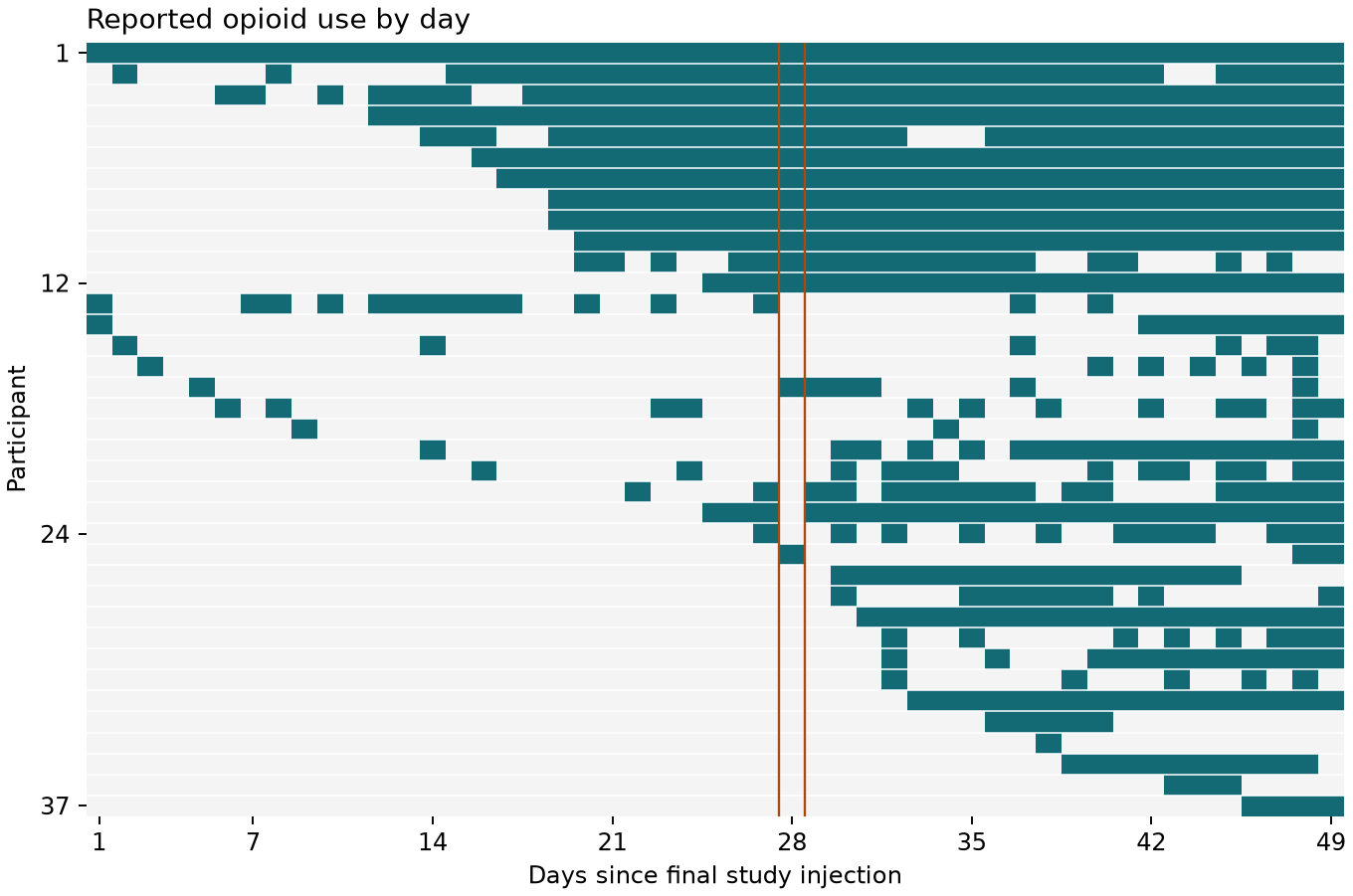
Figure 1. Each row shows one participant who reported use on days 29–49. Teal marks a day on which the participant recalled using opioids; gray means no use was documented. The vertical lines enclose day 28. Participants who reported use on days 27, 28 and 29 appear first.
Of the 37 who reported use on days 29–49, 12 reported at least two use days by day 20, before even the earliest permitted repeat injection. Repeated use before day 28 occurred both among those whose final injection was their first (10 of 21) and among those whose final injection was their second or later (8 of 16).
Urine tests confirmed exposure on both sides of day 28 for some participants. Of all 104 participants, 28 gave a usable specimen on days 29–49. Eighteen tested positive. Of those 18, eight reported repeated use on days 1–27, and six tested positive in both periods. Urine tests provided little independent evidence about the uninterrupted runs: of the 12 people who reported daily use across day 28, seven gave no specimen during the part of the run before day 28. Five gave a specimen then, and two tested positive. The evidence for use on consecutive days comes from recall.
Methods
We used CTN-0094, a public collection of clinical trial data in a common format, version 1.1.0. We examined all 805 distinct combinations of participant and injection date among the 283 X:BOT participants assigned to naltrexone. Of those participants, 204 received an injection, matching the count in the primary trial report.
We used only each participant’s last recorded study injection. We included participants who received fewer than the planned maximum of six injections and whose last dose fell on or before day 119 after random assignment. This allowed time for another dose at the usual interval before the week-22 dosing limit and for observation through day 49 after the last injection by week 24. Participants were eligible whether or not they returned for a visit. The X:BOT protocol, sections 8.5.1.1–3, allowed another injection as early as day 21 and, under specified conditions, allowed treatment to resume through day 49. Day 28 therefore marks the usual dose date rather than a confirmed appointment.
The trial used Timeline Followback interviews, in which participants recalled their substance use day by day. An interview could cover the time since the last assessment. We counted distinct days coded as heroin use or under the grouped opioid category, excluding methadone and buprenorphine. We compared days 1–27 with days 29–49 and used day 28 only to assess whether daily use continued across the usual dose date. Two distinct days counted as repeated use even if there was a gap between them. An uninterrupted run required reported use on every day. We left missing days unknown and used the Wilson method to calculate confidence intervals for proportions of participants.
For urine tests, we matched specimens within the acceptable temperature range to positive opiate or oxycodone screens from the same participant on the same date. We compared the same two periods and included later positive tests regardless of whether the participant reported use.
Interpretation
For nearly half of those who reported use after the usual dose date, more than an isolated day of use preceded it. The trial’s stopping rule helps explain why such histories appear among people who received no further study injection. Relapse ended study medication and regular research visits. Starting on day 21 after random assignment, seven consecutive days of reported use could meet a trial criterion for relapse. All ten participants who reported a full week of use before the usual dose date placed such a week within that qualifying period. Earlier use could therefore have been a reason treatment ended.
The calendars date use as participants recalled it. Clinic staff may have learned of it later, and missing histories limit both the count of earlier use days and who appears in the group reporting later use. The records cannot establish why an individual stopped study injections, whether treatment continued elsewhere or when naltrexone stopped blocking opioid effects. The trial histories show the timing of reported use but offer no comparison of dosing schedules.